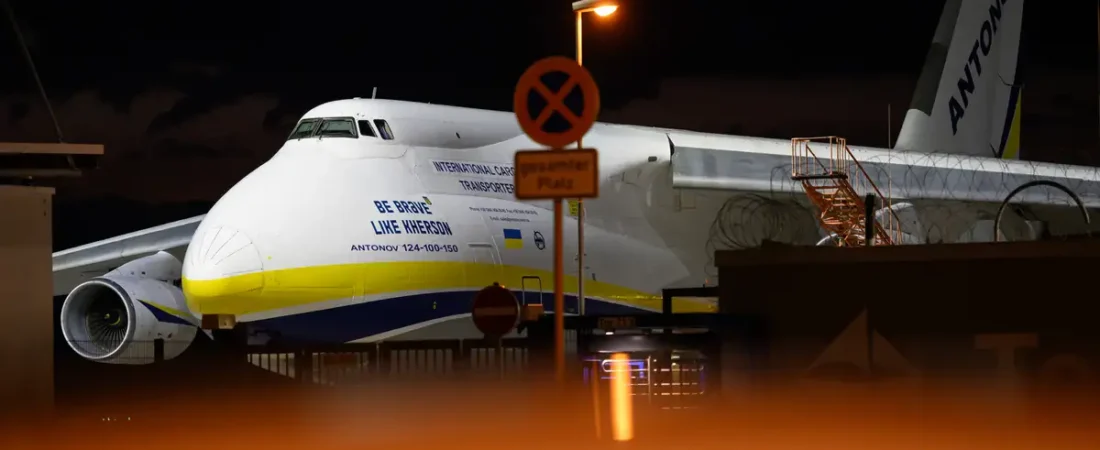
German intelligence services have uncovered a major Russian sabotage operation targeting Leipzig-Halle Airport. Specifically, investigators identified a Russian military intelligence operative and a recruited Belarusian national behind the foiled strike. The primary target was a Ukrainian Antonov cargo aircraft carrying roughly 25,000 liters of jet fuel.
Fortunately, the explosive-laden drone failed to detonate on the tarmac because a detonator malfunctioned. According to classified investigative files, the plot involved 1.8 kilograms of military-grade Semtex. Furthermore, the operatives concealed the plastic explosives inside ordinary food cans mounted onto customized 3D-printed drones.
Investigators established that the Russian suspect belongs to the GRU, Russia’s foreign military intelligence agency. However, German authorities did not place him under active surveillance when he arrived from Turkey. Instead, limited domestic resources allowed the operative to coordinate the attack and swiftly flee to Russia via Serbia.
Meanwhile, the Belarusian accomplice entered the Schengen Area through Latvia shortly before the operation. German intelligence officials believe he served as a hired proxy agent for the GRU. In addition, European police agencies linked his DNA to previous sabotage attempts, including an arson attack in Poland and past criminal offenses in Finland and Lithuania.
Moreover, investigators discovered that the explosives were smuggled into Germany across borders from Serbia and Bulgaria. German police later located underground supply caches near the airport by tracking the suspects’ rental car movements.
Hybrid Threats Reshape EU Security and Enlargement
This foiled strike demonstrates how covert hybrid warfare is testing European critical infrastructure. Therefore, European Union leaders face mounting domestic pressure to overhaul border surveillance and counter-intelligence coordination. As a result, cross-border intelligence sharing between EU member states and agencies like Europol will likely accelerate. The importance of protective measures has been highlighted by French President Emmanuel Macron as well.
In particular, the suspects’ transit through candidate countries like Serbia raises significant foreign policy dilemmas. Because EU accession requires strict alignment with common European foreign and security standards, Brussels will inevitably increase scrutiny on regional transit hubs. Consequently, candidate countries must demonstrate robust cooperation against hostile intelligence activities to maintain momentum in their EU membership talks.
Based on reporting from WELT and POLITICO.