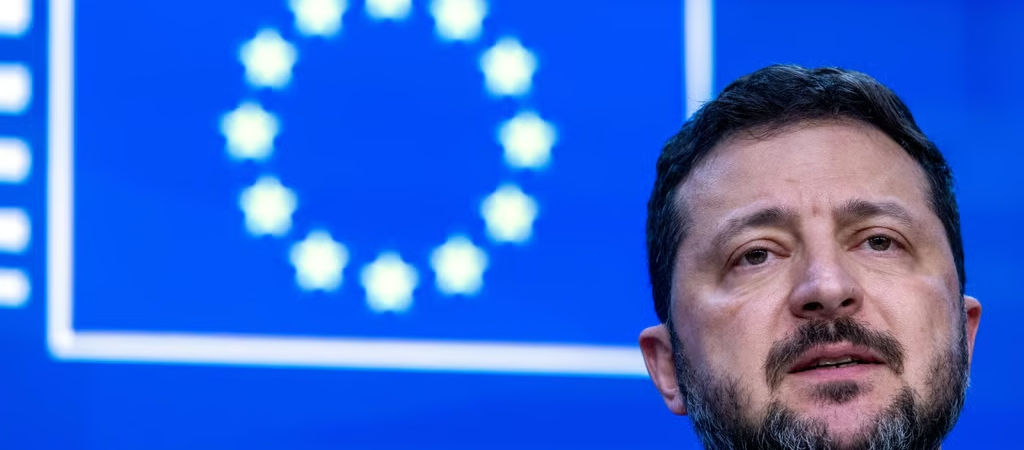
Ukrainian President Volodymyr Zelenskyy has issued a stark warning to European Union leaders. Specifically, he declared that up to 20 million Ukrainians could flee westward if Russia wins the war. He addressed journalists during a high-stakes summit in Brussels on Friday. Moreover, he emphasized that Moscow’s forces continue to push civilians out through relentless attacks. Therefore, European security remains directly tied to Ukraine’s survival.
Currently, more than four million Ukrainians live inside the EU under temporary protection status. For instance, countries such as Germany, Poland, and Czechia host the vast majority of these displaced citizens. However, a total collapse of Ukraine’s defenses would dwarf these figures. In fact, it would trigger the largest migration wave in modern European history.
Meanwhile, Kyiv is facing a grueling winter under sustained Russian air bombardment. In addition, Ukraine confronts a massive budgetary deficit next year. The country still needs tens of billions in foreign aid to maintain basic government operations. As a result, Zelenskyy traveled to Brussels to secure vital financial guarantees. However, EU leaders are currently wrestling with domestic inflation, rising energy costs, and contentious debates over their own budget priorities.
Implications for EU Enlargement and Regional Stability
First, Zelenskyy’s projection serves as a strategic wake-up call for European capitals. If Kyiv falls, the financial burden of integrating 20 million refugees would far exceed the cost of military aid. Consequently, frontline member states are pushing harder for accelerated defense production.
Furthermore, this dynamic directly reshapes the debate over EU enlargement policy. Some member states argue that rapid accession integration helps stabilize the continent’s eastern border. Conversely, other capitals worry about the long-term fiscal liabilities of admitting an embattled state. Nevertheless, the alternative scenario poses a far greater risk to EU cohesion. Therefore, Brussels must balance immediate survival aid with structured pre-accession reforms to prevent complete regional destabilization.