Violent weekend unrest recently swept across France. However, voter intentions for the upcoming presidential election remain remarkably steady. A new Ifop-Fiducial survey demonstrates that the political landscape did not shift overnight. Consequently, voters appear largely unmoved by the dramatic scenes of street riots.
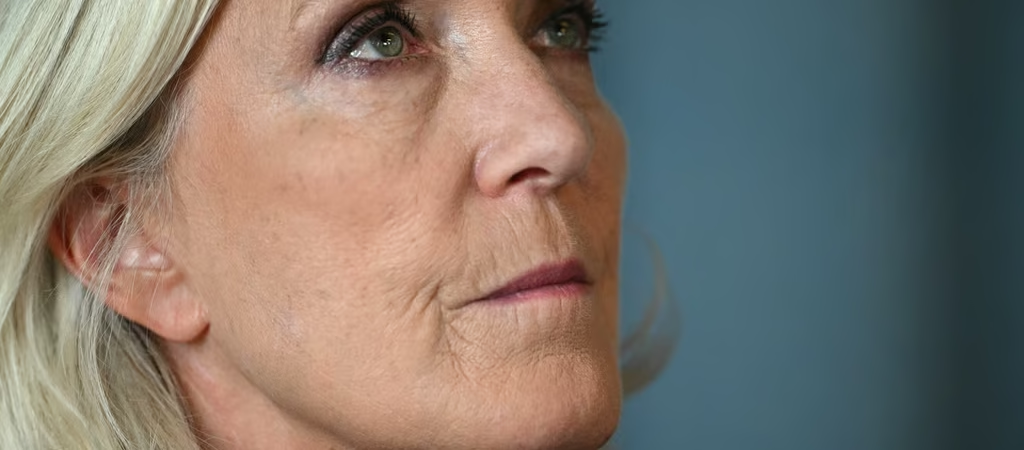
Far-right leader Marine Le Pen retains a dominant lead. Specifically, she commands between 34% and 38% of voter support across several tested scenarios. Many analysts anticipated an immediate surge for her hardline platform. In contrast, her numbers showed little movement after the chaotic weekend.
Similarly, far-left politician Jean-Luc Mélenchon held his ground. The French government repeatedly blamed his allies for stoking street violence. Nevertheless, judicial authorities expressed skepticism about those political claims. For instance, Paris prosecutor Laure Beccuau refused to confirm the government’s narrative regarding those arrested.
Therefore, the high-stakes battle for the second-round runoff remains fiercely competitive. Mélenchon is currently locked in a statistical tie with center-right former Prime Minister Édouard Philippe. In addition, center-left MEP Raphaël Glucksmann remains a formidable contender within the margin of error. As a result, the race to challenge Le Pen in round two is wide open.
Meanwhile, French authorities are preparing for renewed weekend unrest. Prime Minister Sébastien Lecornu announced a massive security mobilization to protect public infrastructure. Elite counterterrorism squads and military units will assist local police forces. Furthermore, municipal officials retain the power to enforce localized night curfews.
Strategic Implications for Brussels and EU Expansion
The enduring political deadlock in Paris directly affects broader European governance. First, France plays an indispensable role in steering EU enlargement policy. If anti-establishment forces gain the presidency, institutional support for prospective members could quickly evaporate. For example, nations like Ukraine, Moldova, and Western Balkan candidates rely heavily on consistent French diplomatic backing.
Moreover, recurrent domestic turmoil severely paralyses French influence within European Council debates. Because French policymakers must extinguish domestic crises, Paris cannot drive forward crucial reforms in defense or fiscal integration. Consequently, strategic decision-making in Brussels risks grinding to an agonizing halt. Candidate nations may therefore face protracted delays on their path toward full accession.
Based on reporting from POLITICO.