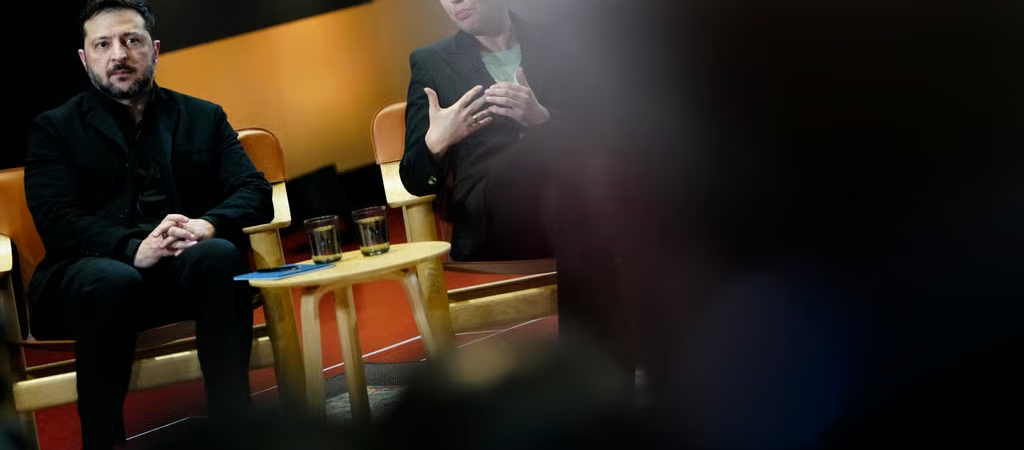
Ukrainian President Volodymyr Zelenskyy has issued a firm appeal to European capitals. Specifically, he urged them to select a single envoy for prospective peace talks with Russia without delay.
Speaking during an official visit to Denmark, the Ukrainian leader set a tight deadline. Consequently, he expects European allies to finalize this joint mandate by the end of November at the latest. In addition, Zelenskyy suggested that a high-level meeting in Germany could serve as the deadline.
The Push for European Unity
However, securing an agreement among diverse allies will not be simple. The prospective envoy must represent not only the European Union, but also key non-EU partners such as the United Kingdom and Norway. Therefore, broad consensus across the continent remains essential.
Moreover, Washington is actively pressing Europe to secure a direct seat at future diplomatic summits. According to reports from ongoing meetings in the United Arab Emirates, US officials insist that European leaders join future talks. For instance, negotiations will directly tackle broader continental security arrangements alongside the war in Ukraine.
Nevertheless, internal division currently hampers Brussels. While member states finance most of Kyiv’s budget, national capitals disagree over engagement strategies with Moscow. For example, Italian Prime Minister Giorgia Meloni recently criticized the bloc’s diplomatic efforts as disorganized and fragmented.
Strategic Impact on EU Enlargement
Meanwhile, the appointment of an EU-backed envoy carries profound consequences for Kyiv’s European trajectory. Ukraine remains an official candidate state pursuing full membership. As a result, its postwar security architecture will directly define the future perimeter of the European Union.
Furthermore, allowing Europe to be sidelined in peace negotiations would severely undermine the union’s geopolitical credibility. Candidate countries in Eastern Europe and the Western Balkans are monitoring the situation closely. Consequently, a strong, unified voice in peace discussions will prove whether the EU can protect its prospective members or remain secondary to Washington and Moscow.