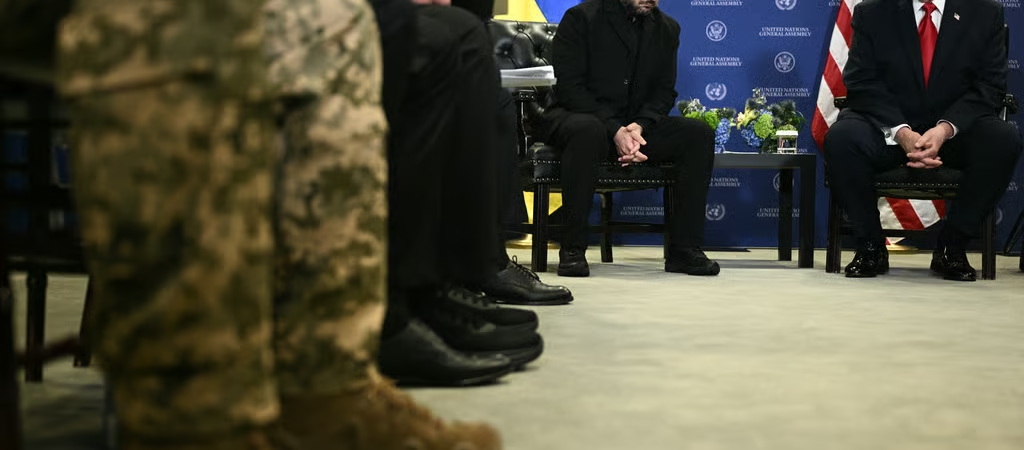
European capitals have quickly rallied around Ukrainian President Volodymyr Zelenskyy. This decisive response follows remarks by US President Donald Trump urging Kyiv to replace its wartime leader. Consequently, leaders across Poland, Germany, and the United Kingdom rushed to reaffirm their steadfast solidarity. In contrast to Washington, European allies insisted that Ukraine’s leadership is solely a matter for Ukrainian citizens.
The sudden diplomatic dispute erupted over energy sanctions and frontline military tactics. Specifically, Washington recently decided to ease diesel restrictions on Moscow. As a result, Trump lashed out at Kyiv after Ukrainian forces targeted Russian oil refineries. However, Zelenskyy countered that strikes on oil assets would halt only if Moscow stopped bombing Ukrainian energy networks. Therefore, European partners moved rapidly to defend Kyiv’s sovereign conduct.
Polish Prime Minister Donald Tusk declared that nobody could break Ukraine’s determination against Russian aggression. Furthermore, Tusk confirmed that Europe remains fully united behind Ukraine’s legitimate leadership. Meanwhile, German Foreign Minister Johann Wadephul demanded strategic clarity from international allies. In addition, British officials underscored that democratic choices belong exclusively to the Ukrainian people. Similarly, Downing Street promised to maintain strict sanctions against Moscow despite American hesitation.
Strategic Fallout for EU Enlargement
This transatlantic split directly impacts the European Union’s broader enlargement agenda. For instance, Ukraine remains an official EU candidate country pursuing rigorous wartime reforms. Therefore, any external challenge to Kyiv’s domestic stability threatens its administrative alignment with Brussels.
Moreover, EU member states must now shoulder heavier financial and security responsibilities. As a consequence, central and eastern member states will push harder for autonomous European defense mechanisms. In fact, European capitals can no longer take transatlantic cohesion for granted when supporting prospective members. Ultimately, Brussels has signaled that candidate status brings unconditional political backing against external political meddling.