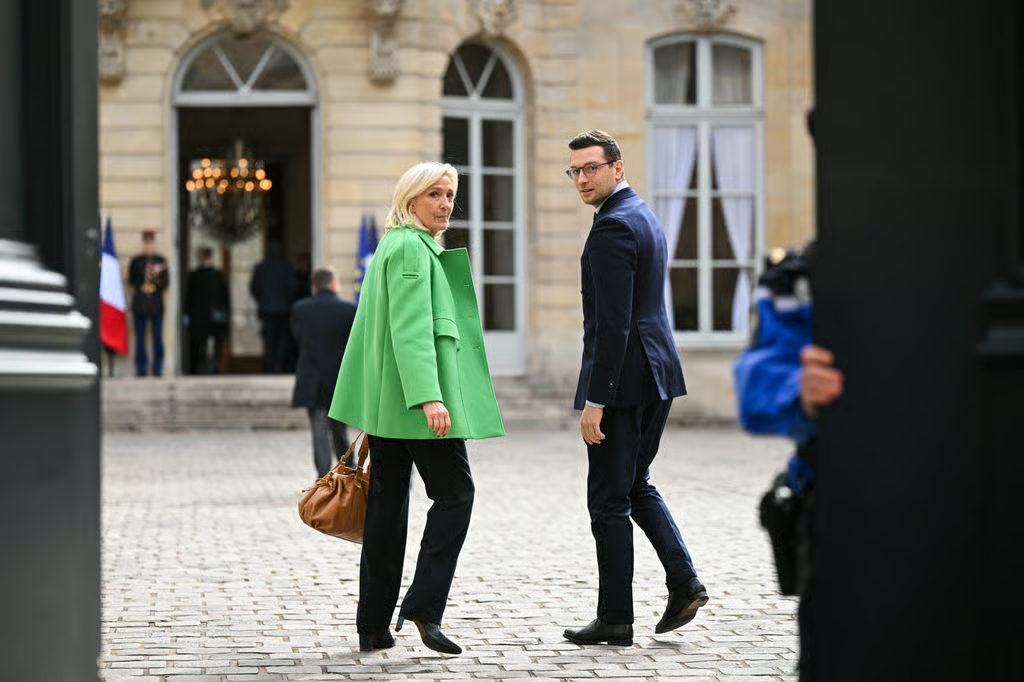
Internal friction is emerging at the highest levels of France’s National Rally (RN), as party leader Jordan Bardella and longtime figurehead Marine Le Pen publicly diverge on core policy positions ahead of the country’s next presidential race.
Bardella, who had spent months positioning himself as the movement’s presidential standard-bearer, was forced into a secondary role in July after a court reduced Le Pen’s sentencing over EU fund embezzlement, clearing her path to run. Since Le Pen reclaimed the top spot on the ticket, significant policy divergences have surfaced regarding public spending, pension reform, and divisive cultural proposals.
Economic Divisions and High-Profile Resignations
The rift has become most visible on economic stewardship. While Bardella has spent recent years courting mainstream voters and business leaders by projecting fiscal discipline, Le Pen has reaffirmed populist pledges, including reversing President Emmanuel Macron’s pension overhaul to restore the retirement age to 62.
The policy divide triggered the immediate departure of François Durvye, a key economic strategist who advocated for strict fiscal restraint and reportedly urged Bardella to mount his own independent candidacy. The high-profile exit exposed internal disagreements, with Bardella describing the resignation as Durvye’s personal choice, while Le Pen framed it as her own decision.
Differences have also emerged over social policy. Following remarks from senior RN lawmakers suggesting that wearing a hijab in public would result in immediate fines under a Le Pen administration, Bardella appeared to soften the tone, suggesting that such restrictions would instead be subjected to a public referendum.
Strategic Dilemma: Base Appeal vs. Mainstream Viability
The competing messages underscore a deeper strategic dilemma within the National Rally:
- Fiscal credibility: Bardella’s push to reassure institutional markets conflicts with costly electoral pledges, such as early retirement.
- Electoral broadening: Attempts to attract centrist and conservative runoff voters clash with traditional, hardline identity politics championed by party veterans.
- Leadership dynamics: The uneasy power-sharing agreement places Bardella in line for the premiership, a role with considerably less executive autonomy than the presidency.
Implications for EU Governance and Enlargement
The policy trajectory of France’s leading opposition party carries significant weight for Brussels. As one of the European Union’s two primary political and economic engines, France plays an indispensable role in shaping the bloc’s strategic agenda, fiscal rules, and defense autonomy.
Should the National Rally secure power under Le Pen’s platform, the EU could face intensified confrontations over budget discipline, state aid rules, and sovereignty over national law. Furthermore, an RN-led government would likely introduce substantial hurdles for the EU’s enlargement agenda. The party has consistently opposed the accession of new member states, meaning candidate countries across the Western Balkans as well as Ukraine and Moldova could face prolonged vetoes or heightened procedural barriers from Paris, effectively slowing the bloc’s eastward expansion.
Based on reporting from POLITICO.