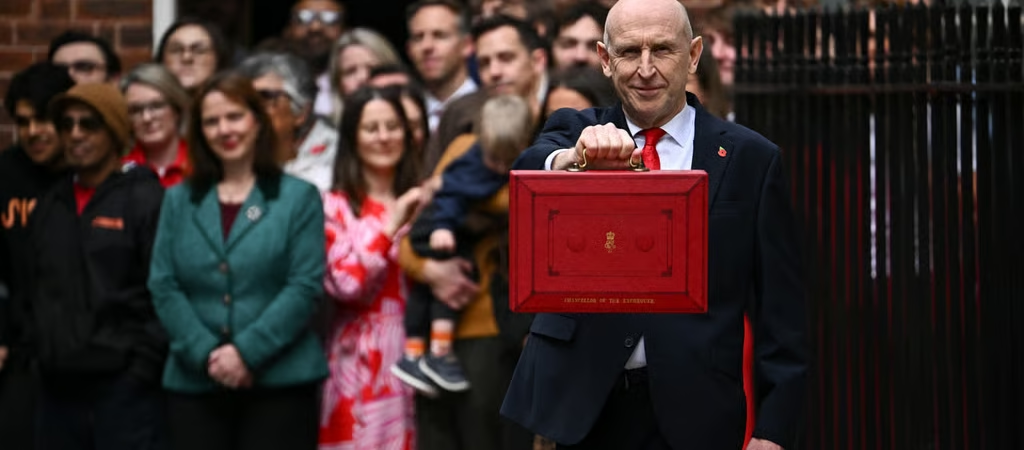
UK Prime Minister Andy Burnham entered Downing Street promising radical transformation. However, his government’s maiden fiscal blueprint delivers cautious stability instead. Chancellor John Healey presented the fiscal plan on Wednesday. As a result, observers quickly labeled it a holding strategy.
Moreover, mounting external pressures heavily restricted Treasury spending. Global oil prices surged following fresh conflict between the United States and Iran. Consequently, British growth forecasts for 2027 fell sharply to one percent. In response, Healey introduced short-term relief for struggling households. For instance, the government approved a temporary one hundred pound energy subsidy. Additionally, ministers extended regional transport fare caps until 2027.
Major Defense Boost for Kyiv
Nevertheless, defense spending stood out as a clear priority in Westminster. Healey unveiled a critical £10 billion economic and military package for Ukraine. President Volodymyr Zelenskyy welcomed this vital assistance immediately. Furthermore, London pledged to raise military spending to three percent of GDP by 2030. Therefore, the UK hopes to align with NATO’s rising defense benchmarks by 2035.
Implications for EU Security and Enlargement
This fiscal plan carries direct consequences for the European Union. In particular, London’s substantial Ukraine commitment relieves urgent financial pressure on Brussels. Candidate nations, especially Ukraine and Moldova, rely heavily on coordinated Western financing to maintain economic stability.
Because British support remains robust, EU leaders gain valuable breathing room during their own defense spending debates. Meanwhile, member states face identical inflationary pressures from volatile energy markets. Thus, joint security procurement may accelerate across the continent to share rising costs.
However, Burnham avoided broader revisions to post-Brexit trade relations. In fact, Downing Street postponed structural economic reforms until after upcoming domestic reviews. Consequently, Brussels must wait longer for meaningful resets in bilateral UK-EU engagement.
A Calculated Holding Pattern
Meanwhile, domestic critics on both sides voiced deep frustration. Left-wing allies argued that timid reforms fail to tackle systemic inequalities. Conversely, Conservative opponents condemned the budget as an evasive compromise. In addition, the Treasury introduced a short-lived levy on commercial banks. This temporary measure will expire within fifteen months.
Hence, Burnham is preserving political capital for an extensive ten-year strategy. Despite persistent election speculation, Burnham firmly ruled out a snap general election this year.